گارد پنجه عقاب

محسن ولی پور
+ نوشته شده در جمعه دهم مرداد ۱۳۹۳ ساعت 11:22 توسط محسن ولی پور
|
تای چی از هیچ زاده شده اون مبدا حرکت و سرچشمه وجود . جینگ و جیان وقتی این دو در هم آمیزند جدا ناپذیرند بگذار احساس تو بر عقل تو حاکم شود آنوقت میبینی که طبیعت است که به تو آموزش میدهد
و شما می توانید همه چیز از طبیعت یاد بگیرد
ای چی چوان یا تای جی چوان (به انگلیسی: Tai Chi Chuan یا Tai ji Quan) (با معنی لغوی نهایت برتر) یکی از سیستمهای نرم و درونیِ هنر رزمی ووشو یا کونگفوی چینی میباشد.
این هنر رزمی، یکی از زیباترین و محبوبترین هنرهای رزمی در چین و کل جهان است و برای بهبود سلامتی، افزایش طول عمر و آرامش روحی انجام میشود. این هنر که با نگرش عمیق فلسفی شکل گرفته با کمک ایجاد چرخش انرژی در انسان و تخلیه انرژی درونی یعنی انرژی "چی" یا انرژی بایو الکترومغناطیس درون بدن انسان، یکی از قدرتمند ترین سبکهای رزمی در جهان میباشد. در این هنر عضلات نقش زیادی ایفا نمیکنند ویک تای چی کار سعی در رها کردن کل بدن دارد تا این انرژی بتواند در بدن جاری شود و در موقع مناسب بتوان از آن برای دفاع یاحمله استفاده کرد. تای چی چوان روش مشت زنی یا هنر رزمی است که بر اساس مفاهیم فلسفی آن سعی در به تعادل رساندن همه چیز دارد که در حقیقت نماد یین و یانگ محصول این فرایند است. " تای چی" در فلسفه تائو به معنای فرآیندی است که "ووچی" را به "یین و یانگ" تبدیل میکند و تای چی چوان هنر رزمی است که بر اساس این مفهوم عمیق و فلسفی بنا شدهاست. اساتید تائو صدها سال پیش با معرفی تای چی در حقیقت هنر رزمی را معرفی نمودند که هماهنگ با ریتمهای طبیعت و قوانین حاکم بر طبیعت باشد تا در سطوح بالا نیز منتهی به ادراک طبیعت گردد. تای چی ابتدا بدن را متعادل میسازد , سپس انرژی درونی انسان , ذهن , تنفس عواطف , طبیعت و روح را متعادل میسازد.
هنر رزمی تای چی چوان بر اساس ۱۳ الگوی اصلی شکل گرفته که این ۱۳ الگو عناصر شکل دهنده طبیعت و عناصر اولیه جهان هستند که اساتید کهن این رشته با مطالعه عمیق روی خواص این عناصر کاربردی رزمی یافتند که با طبیعت هماهنگ باشد.
از این ۱۳ الگو، ۸ الگو مربوط به ۸ نوع جین، یا هشت نوع ضربه و دفاع مختلف با تخلیه انرژی درونی میباشد که از تئوری هشت سه خطی ئی چینگ الهام گرفته شدهاست و ۵ الگوی دیگر آن مربوط به ۵ نوع حرکت استراتژیک در تای چی میباشد که از تئوری ۵ عنصر الهام گرفته شدهاست. به همین دلیل میگویند تای چی باعت هماهنگی انسان با طبیعت میشود که در فلسفه وجودی انسان نیز این امر قرار دارد. اما امروزه به دلیل خواص بسیار زیاد این رشته و تاثیراتی که در تنظیم میدان انرژی و به دنبال آن تقویت جسم و روح دارد به عنوان هنر سلامت زیستن در سطح جهان مطرح است. تای چی به عنوان هنری زیبا با تاکید بر جنبه هنریِ آن در تمام سنین و شرایط تمرین میشود و امروزه کاربرد رزمی آن استفاده کمتری دارد. تای چی چوان دارای ۵ سبک رزمی میباشند که عبارتند از: یانگ ؛ چن ؛ وو ؛ سان ؛ هاو در مورد بخش رزمی تای چی، قابل ذکر است که این هنر بخشهای رزمی مختلفی دارد که عبارتند از:
- دوی لین: به مبارزات نمایشی دو یا چند نفره میگویند که به صورت قرار دادی و از پیش تعیین شده اجرا میشود و نفرات فقط تکنیکهای رزمی دفاع و حمله را روی یکدیگر نمایش میدهند.
- چین نا: به این روش به اصطلاح دفاع شخصی نیز گفته میشود که با استفاده از تکینیکهای رزمی هر سبکی طراحی میشود که شامل تکنیکهای قفل مفصل و شناخت نقاط حساس بدن میباشد. این نوع مبارزه به دلیل خطر ناک بودن اجرای آن در مراکز آموزشی صرفا به صورت تمرینی کار میشود.
-تویی شو: تویی شو در لغت به معنای دفاع مانند آب میباشد، بخش مبارزات حسی و درونی تای چی است که مبتنی بر استفاده از انرژی چی میباشد، در این مبارزات حریفان دائماٌ در حال شناخت یکدیگر هستند به همین دلیل به آن هنر شناخت حریف هم میگویند که این هنر موجب تجربیاتی در شناخت میشود که در تمام زندگی قابل استفادهاست. این نوع مبارزه با استفاده از حس و انرژی درونی صورت میگیرد و مانند شنیدن و پاسخ دادن، دو مبارزه دائماً در حال تمرکز بر نیروی درونی یکدیگرندو زمانی که یکی از حریفان اعمال نیرو میکند. طرف مقابل به اصطلاح در حال شنیدن و هدایت نیروی حریف است و زمانی که نیروی حریف اعمال شد طرف دیگر به پاسخ دادن و یا اعمال نیرو میپردازد. تا جائیکه یکی از حریفان از موقعیت استفاده کرده و تعادل نفر مقابل را بر هم بزند. این نوع مبارزه به دلیل این که افراد به صورت حسی در حال سنجش نیروی یکدیگرند، شم مبارزاتی را بالا برده و باعث تقویت نیروی درونی میشود. برخی معتقدند، تویی شو ریشه و منشا پیدایش ورزش جودو میباشد. تویی شو کاملاً تحت قوانین بین المللی انجام میپذیرد و بدون خطر و آسیب دیدگی است و در حال حاضر مسابقات تویی شو در سطوح مختلف برگزار میشود که موسسه ورزشی ووشو و مطالعات انرژی درونی ایران به صورت فعال در این مسابقات شرکت میکند ؛ اولین مدالهای جهانی تویی شو در تاریخ ورزش ایران نیز متعلق به استاد حامد کاتوزی مدیراین موسسه میباشد. تمرینات تویی شو نیز مانند دیگر سبکهای رزمی فرمهایی دارد که به صورت دو نفره اجرا میشود و کمک به ایجاد مهارت در شناخت حریف و حفظ مرکز ثقل خود میکند و حریفان چرخش انرژی و تبادل آن را نیز تجربه میکنند


The term "t'ai chi ch'uan" translates as "supreme ultimate fist", "boundless fist", or "great extremes boxing". The chi in this instance is the Wade-Gilestransliteration of the Pinyin jí, and is distinct from qìch'i, "life energy"). The concept of the taijiwuji ("without ultimate"), appears in both Taoist and ConfucianChinese philosophy, where it represents the fusion or mother[2] of Yin and Yang into a single ultimate, represented by the taijitu symbol  .
T'ai chi ch'uan theory and practice evolved in agreement with many
Chinese philosophical principles, including those of Taoism and
Confucianism. ( ("supreme ultimate"), in contrast with
.
T'ai chi ch'uan theory and practice evolved in agreement with many
Chinese philosophical principles, including those of Taoism and
Confucianism. ( ("supreme ultimate"), in contrast with
T'ai chi ch'uan training involves five elements, taoluneigong & qigong (breathing, movement and awareness exercises and meditation), tuishou (response drills) and sanshou (self defence techniques). While t'ai chi ch'uan is typified by some for its slow movements, many t'ai chi styles (including the three most popular - Yang, Wu, and Chen) - have secondary forms of a faster pace. Some traditional schools of t'ai chi teach partner exercises known as tuishou ("pushing hands"), and martial applications of the taolu's (forms') postures. (solo hand and weapons routines/forms),
In China, t'ai chi ch'uan is categorized under the Wudang grouping of Chinese martial arts[3] — that is, the arts applied with internal power.[4] Although the Wudang name falsely suggests these arts originated at the so-called Wudang Mountain, it is simply used to distinguish the skills, theories and applications of neijiaShaolin grouping, waijia ("hard" or "external") martial art styles.[5] ("internal arts") from those of the
Since the first widespread promotion of t'ai chi ch'uan's health benefits by Yang Shaohou, Yang Chengfu, Wu Chien-ch'uan, and Sun Lutang in the early 20th century,[6] it has developed a worldwide following among people with little or no interest in martial training, for its benefit to health and health maintenance.[7] Medical studies of t'ai chi support its effectiveness as an alternative exercise and a form of martial arts therapy.
It is purported that focusing the mind solely on the movements of the form helps to bring about a state of mental calm and clarity. Besides general health benefits and stress management attributed to t'ai chi ch'uan training, aspects of traditional Chinese medicine[8] are taught to advanced t'ai chi ch'uan students in some traditional schools.
Some other forms of martial arts require students to wear a uniform during practice. In general, t'ai chi ch'uan schools do not require a uniform, but both traditional and modern teachers often advocate loose, comfortable clothing and flat-soled shoes.[9][10]
The physical techniques of t'ai chi ch'uan are described in the "Tai chi classics", a set of writings by traditional masters, as being characterized by the use of leverage through the joints based on coordination and relaxation, rather than muscular tension, in order to neutralize, yield, or initiate attacks. The slow, repetitive work involved in the process of learning how that leverage is generated gently and measurably increases, opens the internal circulation (breath, body heat, blood, lymph, peristalsis, etc.)Kids classes are structured towards self-development whether it be balance, focus, self-control, fitness. Deep breathing exercises allow students to calm themselves down when necessary. This technique helps us deal with such feelings as anger and anxiety. Kicking, blocking, punching and sound focus (yelling), at Kung fu Academy allows students to release tension and aggression in a controlled environment while learning self-defense in a fun but disciplined manner.
Shaolin DragonFrom the dragon we learn versatility and indomitable spirit in our fighting strategies, The Dragon is the mystical aspect of our system. The dragon can change into any animal at any moment. Using simple, basic techniques with a challenging strategy of movement complementary to the opponent’s (when he advances I retreat, when he retreats I advance) prefers zigzagging motions. the dragon has lots of floating motion and a lot of swinging around and whipping. The dragon is noted for its spinning movements, such as spinning heel and spinning back kicks as well as dragon tail wipes. The practitioner moves with his waist loose and supple, and the style makes use of circular waist movements and hip turning movements. Dragon trains spirit. Low level lunges in all directions are very useful during dragon training.
Shaolin Tiger
From the tiger we learn strength and tenacity in our fighting strategies. The tiger is
very powerful and direct, Relying on frontal assault, and aggression The tiger
commits its entire mind and body into each move. There is no hesitation in the
tigers mind. This style simulates lots of breaking, ripping, and tearing. The
practitioner uses rigid open hand techniques with fingers curled like claws, and
makes use of palm-heel strikes and claw-hand strikes, both swung with downward
arcs. The blocking techniques of this style also employs palm-heel blocks and
forearm blocks.Finger tips and revolving pushups are helpful during tiger training. Strengthens the bones, muscles, and
tendons.
From the crane, we learn grace and balance in our fighting strategies. The crane is very aware and evasive. Many people underestimate the cranes power. It does not have much body weight, but it utilizes it very well and it positions itself effectively. The crane has excellent stances, but understanding of being in the proper position at the proper time is its most valuable tool. This is an open, flowing style. The practitioner shapes his hands like a cranes beak, the style adopts many one legged stances. Blocks are preformed with the backs of the practitioners wrists or with the open hand. It has strong wings and uses them often and effectively. Evading attacks instead of blocking them to increase counter attack speed, confusing the target with many arm sweeps, and moving in to the opponent for a better angle of attack.Trains flexibility. Prefers to work at a distance from the opponent and at angles off line from his attacks. Requires great flexibility for its attacking and aversion techniques. The crane has excellent balance and is very at disturbing the balance of others. One legged kicks and blocks are helpful for crane training
Shaolin Leopard
From the leopard, we learn speed and agility in our fighting
strategies. The leopard is extremely fast and angular. It is noted for
its sudden changes of movement and varied angles of attack. . More
precise than the tiger. Relies on great muscular strength. The Leopard
employs many crushing techniques and a lot of internal strikes with the
hands. It gets close to do its damage. It concentrates on powerful
flattened fist blows (representing the attacks of a leopards paws).
Leopard style is a fast, rugged, up close (in your face!) combat style.
Hand to eye drills are good foundations for effective leopard
techniques. Trains for muscle strength
Shaolin Snake
From the snake we learn inner strength (chi), and rhythmic endurance, sinuous,
weaving combative fighting techniques. The snake is very calm and accurate.
The hands, simulating the snakes strikes, are used for
fingertip strikes to the targets temples, eyes, throat, and other vital regions.
However the style also employs kicks. Flexibility is a key part of the snake
training. Don’t neglect upper torso and arm flexibility, not just your legs. The
snake is completely supple in body and mind
 i/ˌkʌŋˈfuː/ or /ˌkʊŋˈfuː/; 功夫, Pinyin: gōngfu) is a Chinese
term referring to any study, learning, or practice that requires
patience, energy, and time to complete, often used in the West to refer
to Chinese martial arts, also known as Wushu.[1] It is only in the late twentieth century, that this term was used in relation to Chinese Martial Arts by the Chinese community.[2] The Oxford English Dictionary defines the term "Kung-fu" as "a primarily unarmed Chinese martial art resembling karate."[3]
This illustrates how this term has been misused in English. The origin
of this misuse can be attributed to the misunderstanding or
mistranslation of the term through movie subtitles or dubbing.[2]
i/ˌkʌŋˈfuː/ or /ˌkʊŋˈfuː/; 功夫, Pinyin: gōngfu) is a Chinese
term referring to any study, learning, or practice that requires
patience, energy, and time to complete, often used in the West to refer
to Chinese martial arts, also known as Wushu.[1] It is only in the late twentieth century, that this term was used in relation to Chinese Martial Arts by the Chinese community.[2] The Oxford English Dictionary defines the term "Kung-fu" as "a primarily unarmed Chinese martial art resembling karate."[3]
This illustrates how this term has been misused in English. The origin
of this misuse can be attributed to the misunderstanding or
mistranslation of the term through movie subtitles or dubbing.[2]
In its original meaning, kung fu can refer to any skill achieved through hard work and practice, not necessarily martial. The Chinese literal equivalent of "Chinese martial art" would be 中國武術 zhōngguó wǔshù.[4]
In Chinese, Gōngfu (功夫) is a compound of two words, combining 功 (gōng) meaning "work", "achievement", or "merit", and 夫 (fū) which is alternately treated as being a word for "man" or as a particle or nominal suffix with diverse meanings (the same character is used to write both). A literal rendering of the first interpretation would be "achievement of man", while the second is often described as "work and time/effort". Its connotation is that of an accomplishment arrived at by great effort of time and energy. In Mandarin, when two "first tone" words such as gōng and fū are combined, the second word often takes a neutral tone, in this case forming gōngfu. The word is also sometimes written as 工夫, this version often being used for more general, non-martial arts usages of the term.[5]
Originally, to practice kung fu did not just mean to practice Chinese martial arts. Instead, it referred to the process of one's training - the strengthening of the body and the mind, the learning and the perfection of one's skills - rather than to what was being trained. It refers to excellence achieved through long practice in any endeavor.[5] This meaning can be traced to classical writings, especially those of Neo-Confucianism, which emphasize the importance of effort in education.[6]
In the colloquial, one can say that a person's kung fu is good in cooking, or that someone has kung fu in calligraphy; saying that a person possesses kung fu in an area implies skill in that area, which they have worked hard to develop. Someone with "bad kung fu" simply has not put enough time and effort into training, or seems to lack the motivation to do so. Kung fu is also a name used for the elaborate Fujian tea ceremony (Kung-fu cha).
However, the phrase 功夫武術 (kung fu wu shu) does exist in Chinese and could be (loosely) translated as 'the skills of the martial arts
تکنیک پلنگ یکی از تکنیکهای سریع است که همراه با قدرت انجام میشه هر کسی به این تکنیک مسلط باشه شکست ناپذیر میشه
چون هم آمخته با سرعت و قدرت


اِنِّ لِلّ'هِ عِبا'داً اطا'عُوُه فِيما' ارادَ فَاَطاعَهُمْ فيما' اَرا'دوا يَقُوُلُونَ لِشَّيءٍ كُنْ فَيَكُوُنَ
براي خداوند بندگاني است كه خدا را در آنچه اراده كند، اطاعتميكنند. پس خدا نيز آنها را در آنچه بخواهند، اطاعت ميكند. آنهابه چيزهايي كه بخواهند، ميگويند بشو! پس ميشود

ما' يَتَقَرَّبُ اِلَيِّ عَبْدي بِشَيءٍ احَبٌ اِلَيَّ مِمَّا افْتَرَ ضْتُهُ عَلَيْهِ و اِنَّهُ لَيَقَرَّبُ اِلَيَّبِالنَّوا'فِلِ حَتيّ' اُحِبَّهُ فَاِذا' احْبَبْتُهُ كُنْتُ سَمْعَهُ الذّي يَسْمَعُ بِه وَ بَصَرَهُ الَّذي يَبْصُرُبِهِ وَ لِسا'نَهُ الَّذي يَنْطِقُ بِهِ وَ يَدَهُ التِّي يَبْطِشُ بِها' اءنْ دَعا'ني اجَبْتُهُ و اِنْ سَالَنياعْطَيْتُهُ
بنده من تقرب نميجويد به چيزي نزد من كه محبوبتر باشد نزد مناز آنچه بر او واجب كردهام و هر آينه بنده من به وسيله نوافل ومستحبات به من تا آنجا نزديك ميشود كه من او را دوست ميدارمو چون او را دوست داشتم من گوش او ميشوم كه با آن ميشنود وچشم او ميشوم كه با آن ميبيند و زبان او ميشوم كه با آن سخنميگويد و دست او ميشوم كه با آن ميگيرد، اگر مرا بخوانداجابتش ميكنم و اگر از من چيزي بخواهد به او ميدهم
 این آقا هم خواسته پنجه پاهاش رو به رخ مردم بکشه که ببین چقدر واردم


این هم در مورد این ضرب المثل معرفو که میگه چه مردی بود که از زن کم بود!!! بیچاره آقاهه
 بدون شرح
 این عکس رو وقتی برام ایمیل کردن خودم موندم چه توضیحی روش بزارم این که همشون استادن نمیدون ولی خودتون قضاوت کنید
 او خانوم چاقه چند تا قرص لاقری بخوره میشه گفت رزمی کار ه اونم کمربند سیاه دان ۲

استاد ساناز کسرایی از ووشو کاران خوب کشورمون
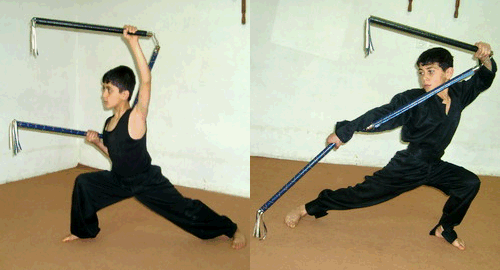 امیر محمد میلانی رشته کنگفو توا کار میکنه چون دوتا عکس برام فرستاد در این حالت میبیند

این دوست خوب ما هم که نهایت ۱۸۰ درجه رو زده
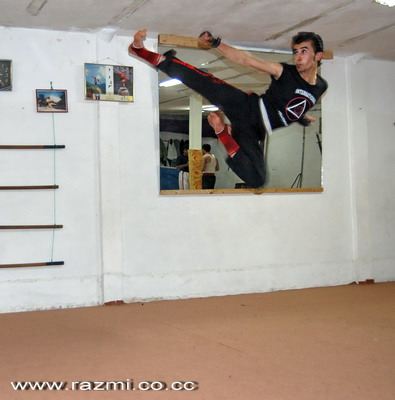 این استاد عزیز ما هم میخواست از سقف باشگاه خارج بشه خوب شد جلوش رو گرفتن فقط نمی دونم این استادهای ما چرا انقدر دوست دارن در حالت پرش عکس بگیرن
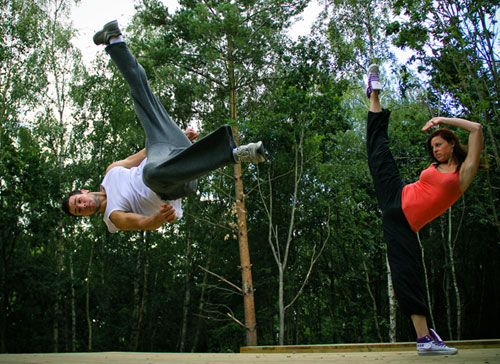
این عکس هم نمی دونم چقدر واقعیت داره
